See it.
Understand the starting point.

Wearable sensors and a connected app. Live muscle and movement feedback for training and rehabilitation.
THE MYOSENZ PLATFORM
Muscle and movement sensing.
Feedback with a purpose.
Understand the starting point.
Turn effort into a clear cue.
Compare. Adapt. Move forward.
Clear feedback, purposeful play and meaningful comparisons, all in one connected software experience.

Make activation, hold and release easy to follow.
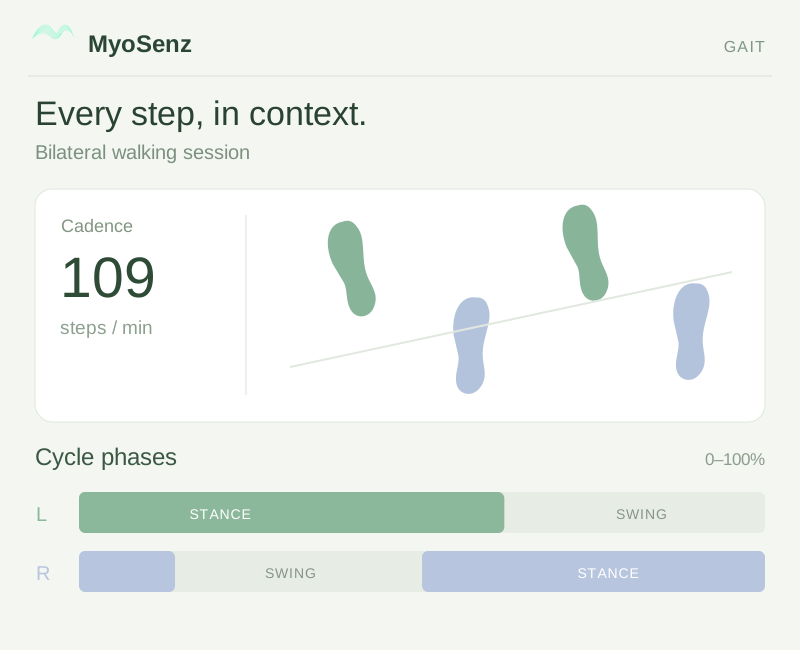
Connect muscle activity with the rhythm of each step.
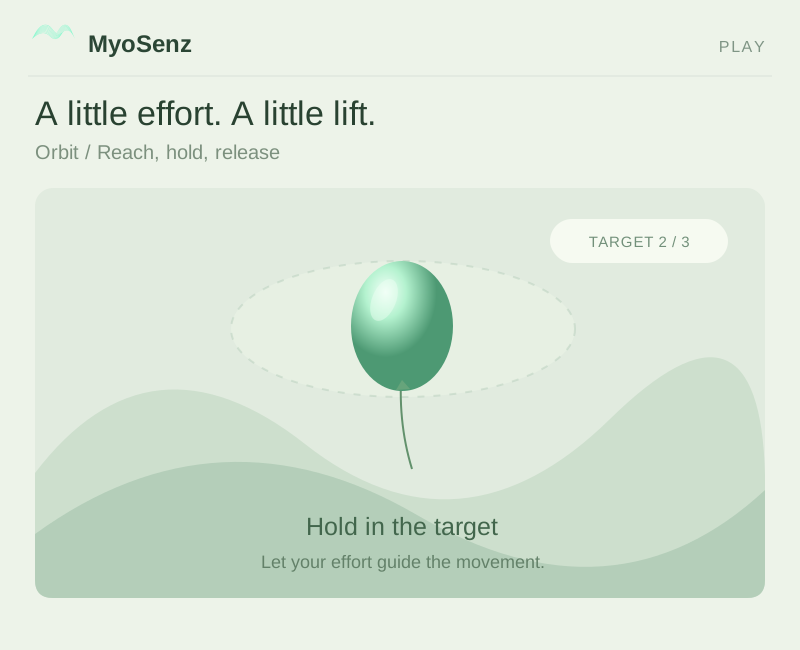
Turn activation, hold and release into an engaging challenge.
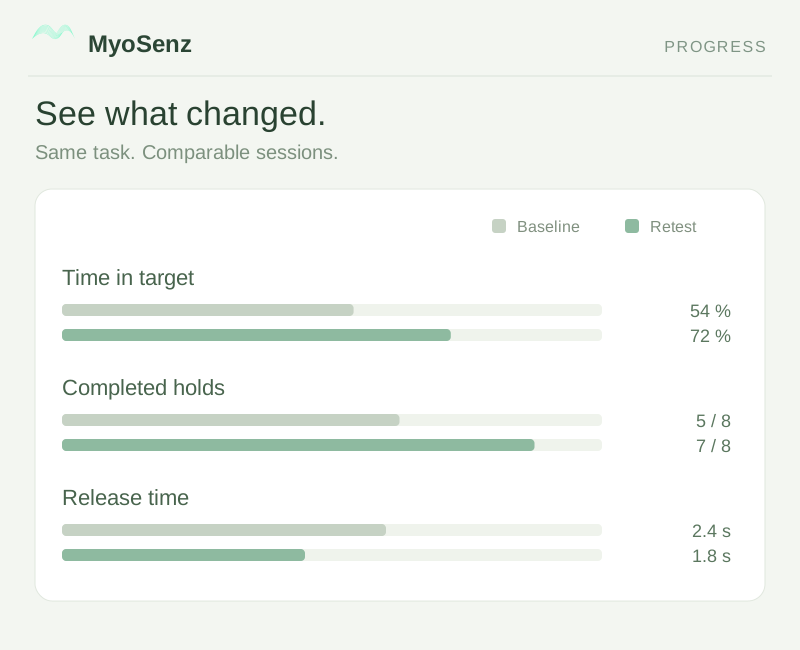
Compare sessions. See changes. Give the next session direction.
Example applications
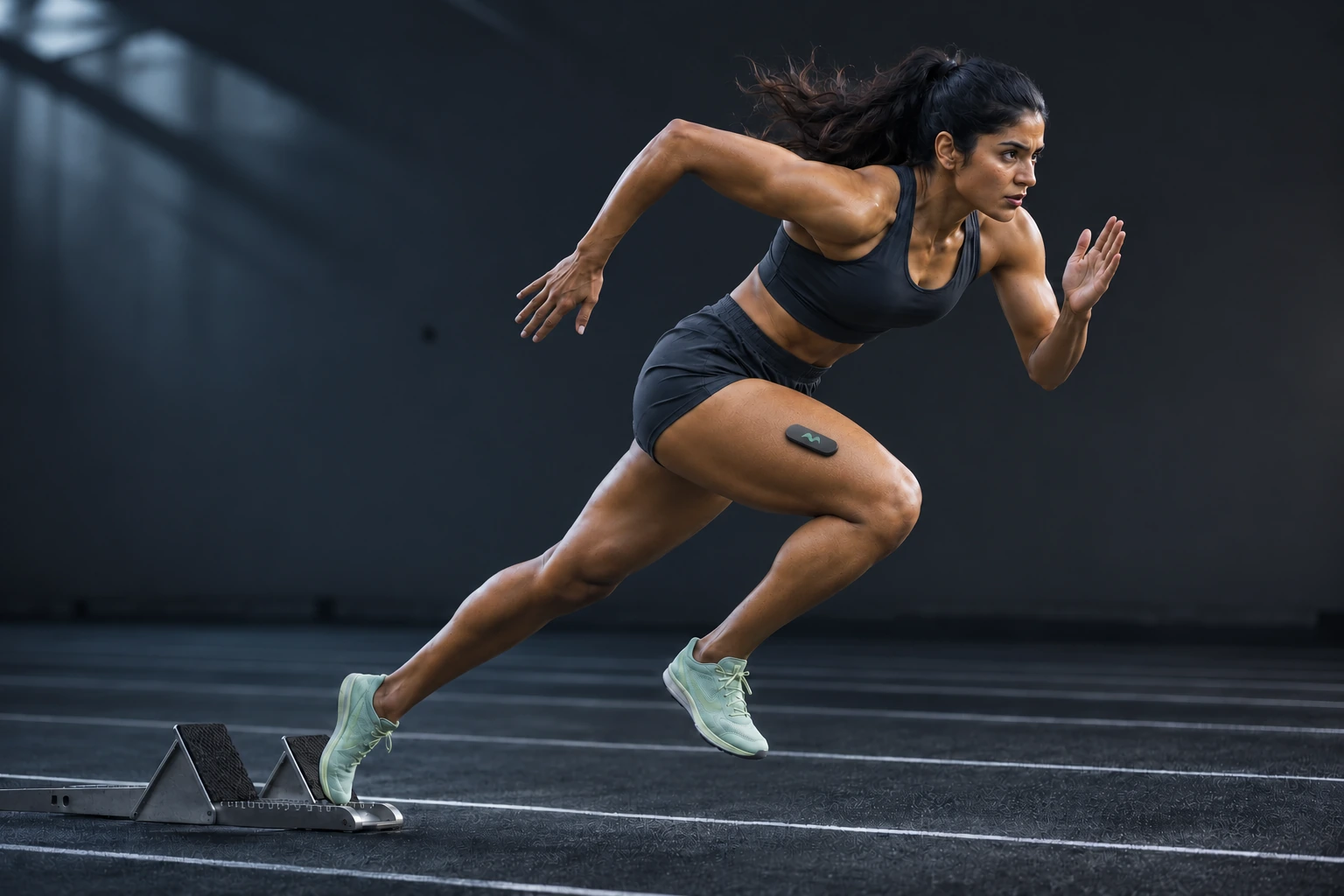
Connect muscle activity with movement, then bring a clearer cue into training.
APPLICATION GUIDES
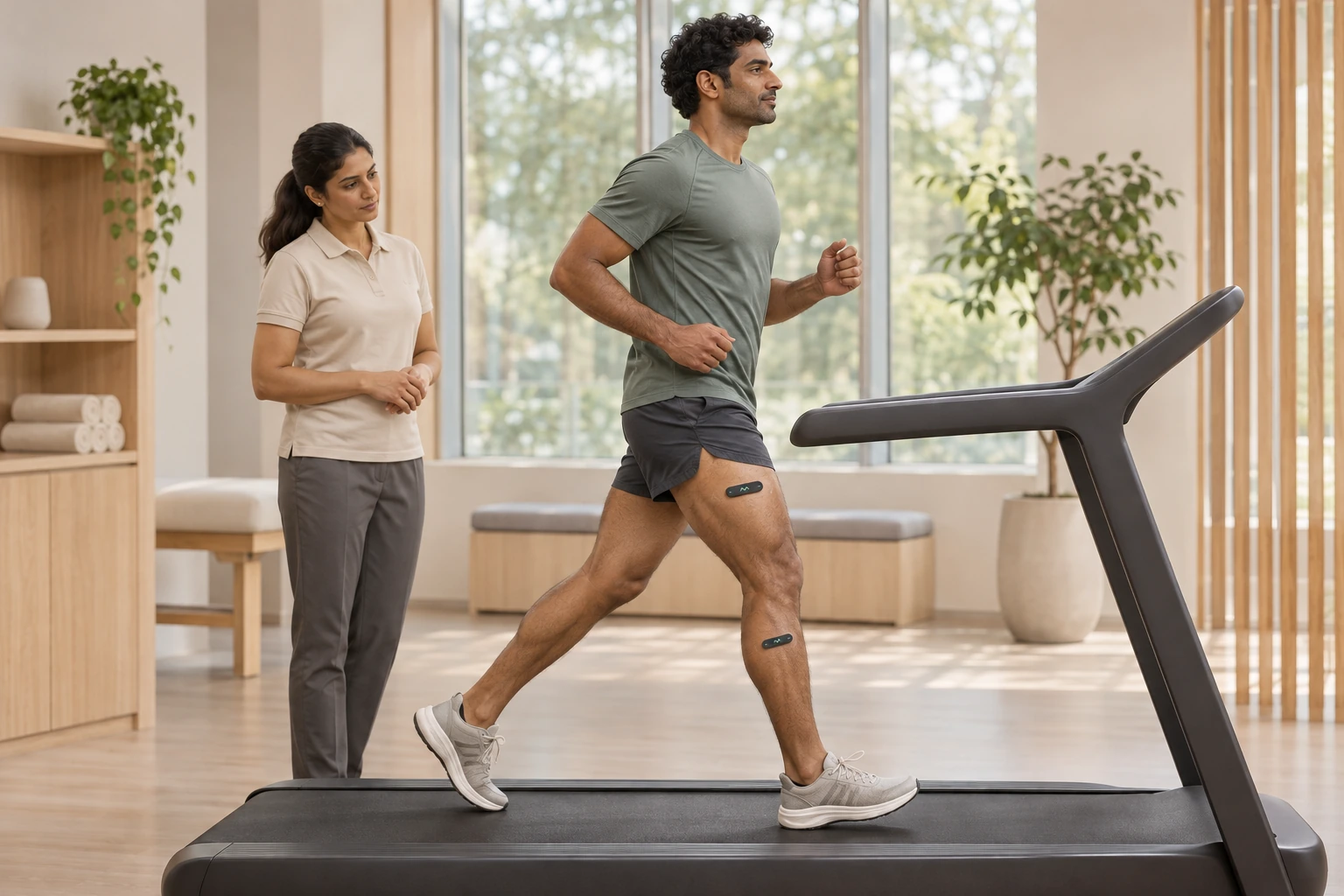
Running & performance
Follow muscle and movement feedback from a controlled exercise into a running task.
Read the guide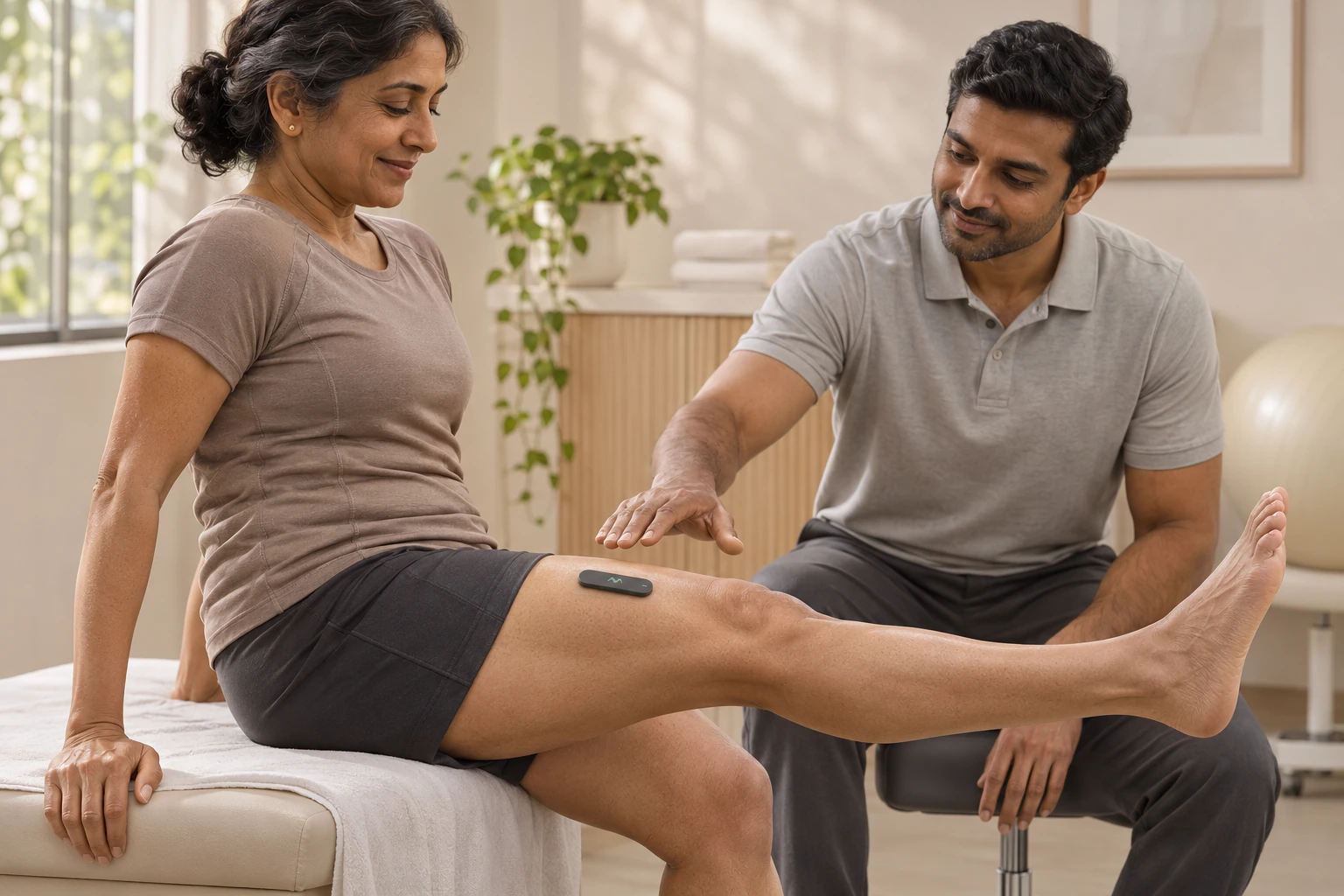
Orthopaedics
Set an activity target, practise a controlled hold, and review each attempt.
Read the guide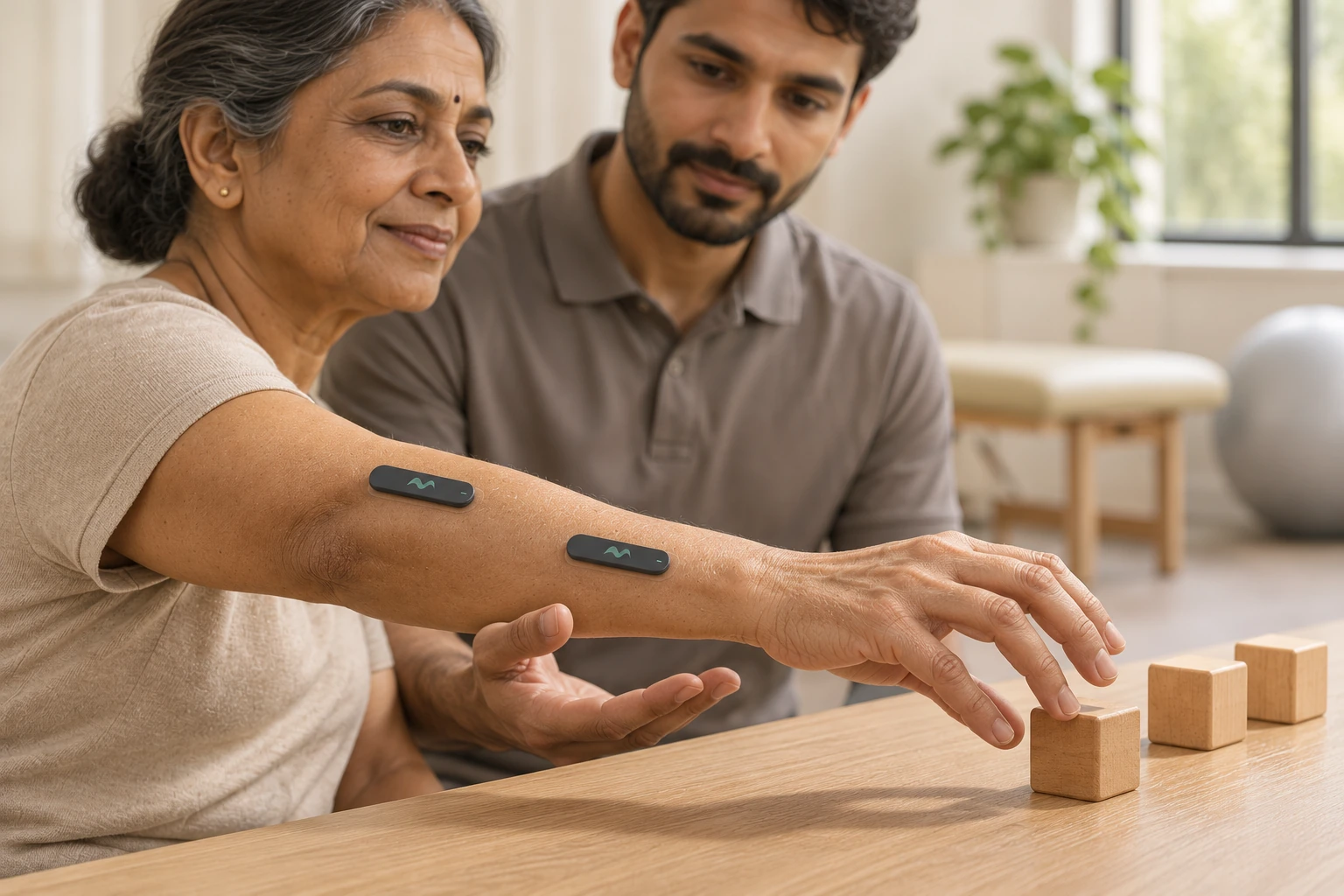
Neurorehabilitation
Give activation and release a visible target, with a clinician choosing the next step.
Read the guideMEET THE MYOSENZ POD
Surface EMG and motion sensing, connected to a world of guided practice.
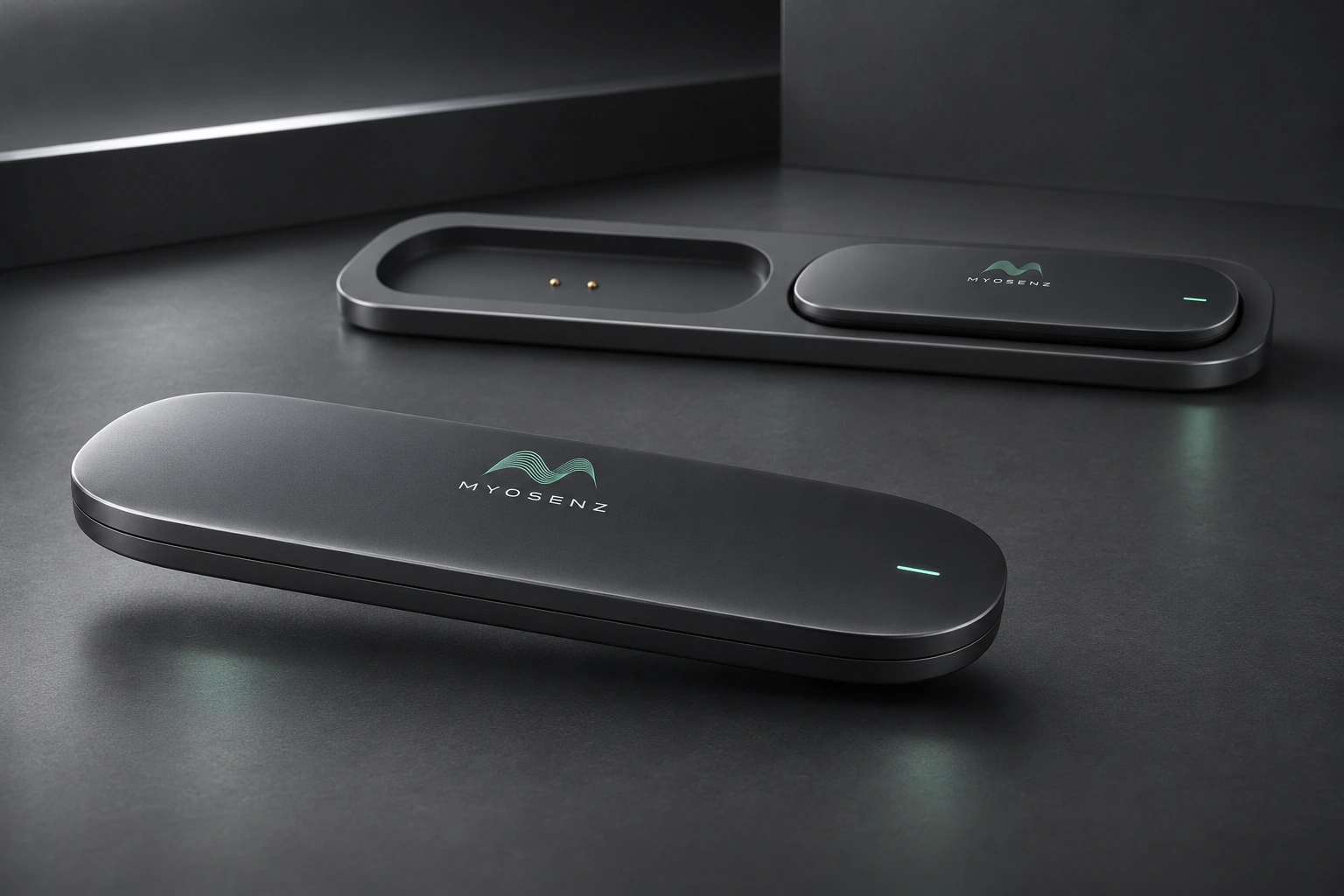
Set a personal target for activation, holding and release.
Compare sides. Explore timing and coordination between selected muscles.
Connect muscle activity with movement. Configure sensors for joint motion or gait.
One platform. More possibilities.
Explore all capabilitiesEXPLORE THE CONNECTION
One elbow bend. Muscle and movement, side by side. Drag to explore.
Connect the signal with the movement.
BEFORE YOUR FIRST SESSION
Set a movement goal, practise with a visual target or game, then repeat the same task. Compare activation, timing and control to help choose the next step.
Explore biofeedback, muscle-controlled games, movement analysis, gait and progress reports. A walkthrough helps identify the right modules and sensor setup for your work.
IMUs can support cadence, step timing and movement analysis. Bilateral comparisons, joint angles and spatial gait estimates need the appropriate sensor setup, calibration and validated software. Explore the capability guide for details.
The design includes adjustable sensitivity, simple cues and short practice rounds. A clinician selects the task and supervision, with caregiver involvement where appropriate. Game scores describe task completion.
EMG senses electrical activity. It does not stimulate the muscle or directly measure strength. Force and pressure measurements require additional hardware.
Tell us your use case. Your enquiry is saved so we can discuss a suitable setup, availability and pricing. No payment is collected.
YOUR NEXT STEP
For your clinic, your team or your research lab.
Start with a conversation.