01Assess
Set a suitable reference.
Record a comfortable reference during the clinician-selected task. Check the signal and document the position, instruction and sensor placement before choosing an activity band.
What are we comparing? ← All guidesExplore MyoSenz
APPLICATION GUIDE / ORTHOPAEDICS
Consider someone after a knee injury who finds it hard to feel the quadriceps engage during a clinician-guided exercise. Focus the session on contraction, hold and release.
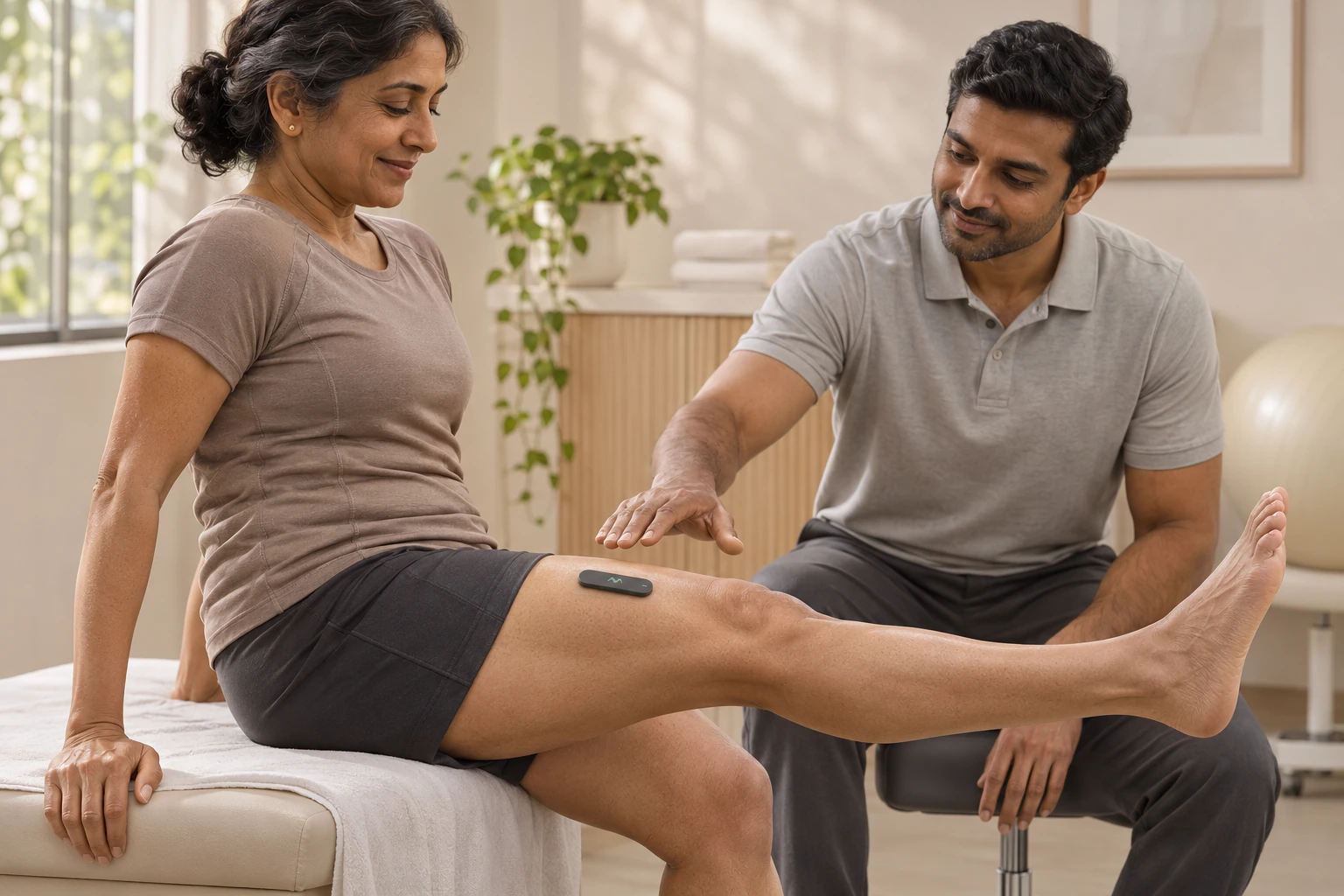
During an agreed knee-extension task, practise bringing the selected quadriceps signal into a suitable band and releasing between attempts. The clinician chooses the load and timing; muscle activity is not measured strength.
Record a comfortable reference during the clinician-selected task. Check the signal and document the position, instruction and sensor placement before choosing an activity band.
What are we comparing?Activate towards the chosen band, follow the hold cue, then release during rest. The clinician can adjust the instruction or target while keeping the task understandable.
Which instruction is useful here?Review time on target and the release between attempts alongside movement and comfort. Keep the cue, adapt the task or choose another exercise for comparison.
What should change next time?myoact describes task-specific EMG work during ACL rehabilitation. Noraxon’s post-ACL case examines movement with Ultium Motion and myoRESEARCH.