01Assess
Start with the running task.
Record a defined running task with consistent pace, surface and footwear. Align the selected muscle signal with supported gait events, keeping the setup available for comparison.
What deserves a closer look? ← All guidesExplore MyoSenz
APPLICATION GUIDE / RUNNING & PERFORMANCE
Consider a runner whose discomfort tends to return on longer runs. The question is whether a cue practised in a single-leg drill carries into their stride.
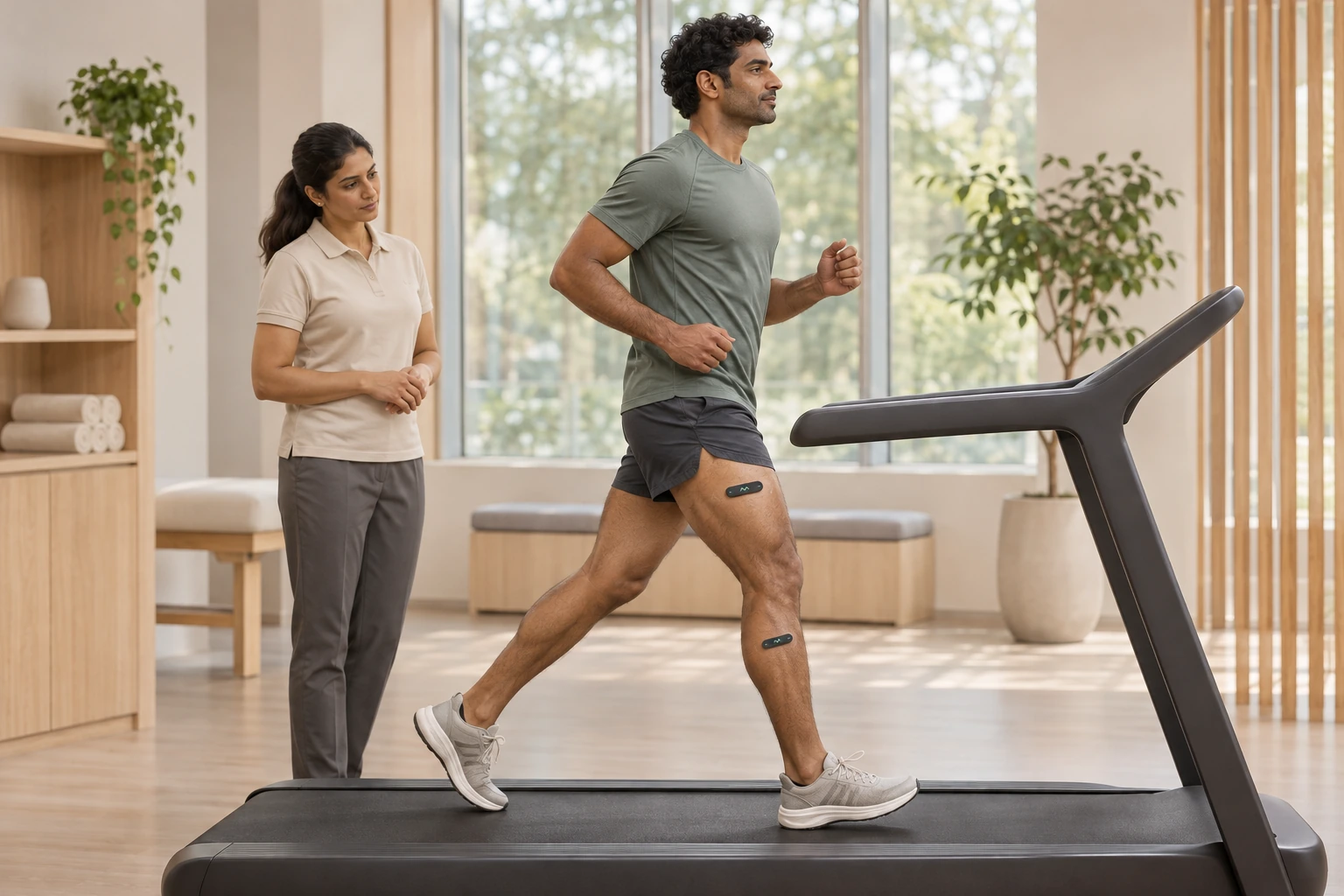
Compare gluteal-muscle activation with stance timing during a defined run, then revisit the task after a practitioner-selected drill. This can inform the next question; it does not establish the cause of pain.
Record a defined running task with consistent pace, surface and footwear. Align the selected muscle signal with supported gait events, keeping the setup available for comparison.
What deserves a closer look?Try one practitioner-selected cue during a controlled drill. Review its timing alongside the movement before taking that instruction back into the running task.
What can the person try now?Repeat the original task. Compare timing and movement alongside the person’s experience, then decide whether to keep the cue, adapt it or investigate another question.
Did the cue help the task?Noraxon’s running case combined EMG, IMUs, video and additional assessment tools. Delsys explains EMG feedback in physical therapy.