01Assess
Find a response to work with.
Choose a comfortable position, check the signal and record an appropriate reference. Explain the display and choose a target for this person and this task.
What response can we practise? ← All guidesExplore MyoSenz
APPLICATION GUIDE / NEUROREHABILITATION
Consider someone practising a reach after a stroke. The therapist wants to make the intended arm-muscle response easier to follow, including when to activate and when to release.
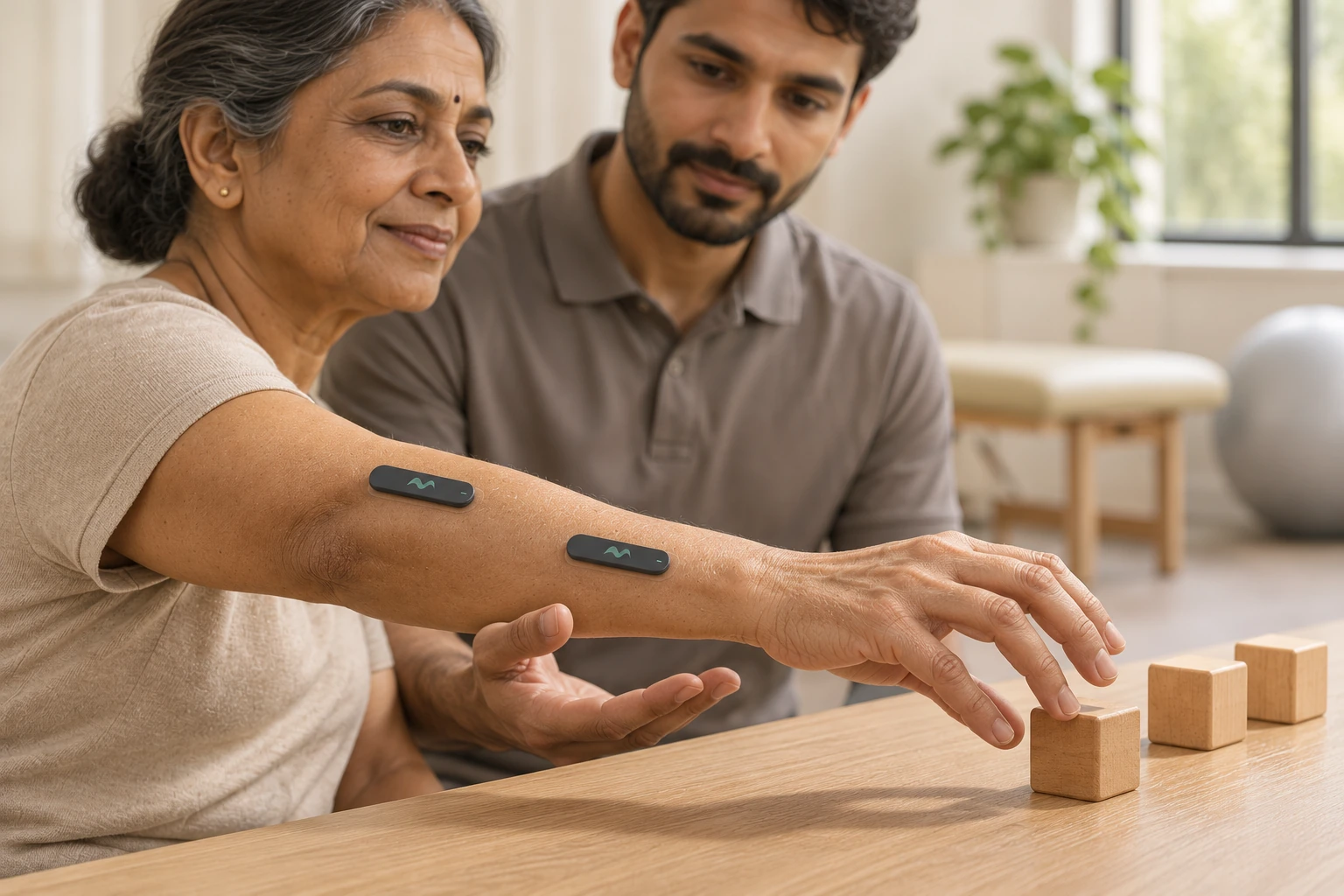
Explore biceps and triceps timing during a therapist-selected supported reach. A simple cue guides the intended response; the therapist decides what coordination is useful for the task.
Choose a comfortable position, check the signal and record an appropriate reference. Explain the display and choose a target for this person and this task.
What response can we practise?Follow the large bar towards the target, hold or release when cued. If a second muscle is monitored, the clinician explains its role in the task.
Can the cue stay simple?Review the attempts with observation and the person’s experience. The next step may be a clearer instruction, a different position or an adjusted target.
What makes the next attempt clearer?Activate · Hold · Release
Noraxon’s guide covers selective activation and coordination. Delsys documents live feedback displays with adjustable thresholds.